


Woodoku - Wood Block Puzzle
4.242.08K Reviews
App Specs
- Version
- 4.14.00
- Updated On
- License
- Free
- Downloads
- 100,000,000+
- Developer
- Tripledot Studios Limited
- Categories
- Puzzle
- Platform
- Android, iOS
Screenshots



 Analysis by AppCompare
I often reach for a block puzzle when I have a few spare minutes and want something more absorbing than scrolling, but I don’t always want the pace or pressure of a timed game. Woodoku - Wood Block Puzzle aims for that middle ground: each move is simple to understand, while the board gradually asks you to think further ahead. I find it best when I treat it as a small logic break rather than a task to finish quickly.
Where the current version fits
Woodoku is a free puzzle game from Tripledot Studios Limited, currently at version 4.13.00 and available for Android devices running version 6.0 or later. It is rated for Everyone, and its broad appeal makes sense: there is no complicated set of rules to learn before you can start placing pieces. The game has a 4.1 average from around 464,000 ratings, with more than 100 million installs, so it has clearly found a large audience among people who like quick, repeatable puzzles.
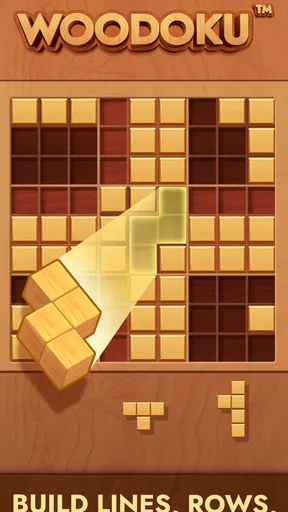
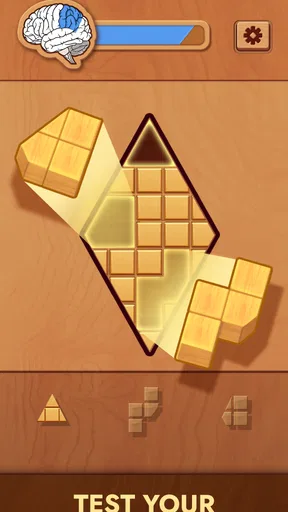
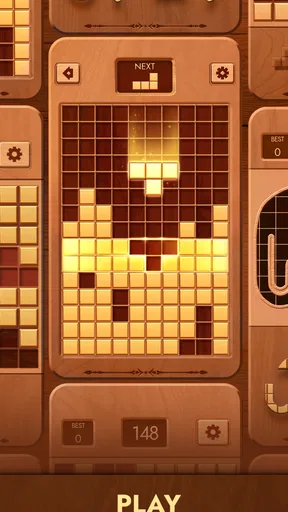
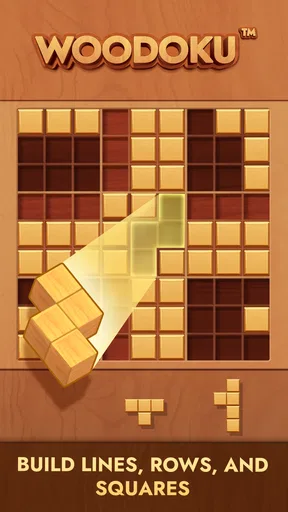
The basic loop is deliberately easy to grasp. You place the available wooden shapes on a 9-by-9 board, aiming to complete rows, columns, or 3-by-3 squares so they clear and make room. There is no need to learn a long campaign or memorize a collection of special powers. The challenge comes from choosing where each shape belongs before the open spaces become awkward.
That simplicity is a strength, but it also defines the game’s limits. Woodoku is not a story-driven puzzle adventure, and it does not offer the changing rules or elaborate level layouts found in some dedicated logic games. If you want a new mechanic every few minutes, a narrative reason to keep going, or a competitive match against another person, a different kind of puzzle game may suit you better. I see this one as a focused board challenge for short sessions, not an all-purpose brain-training course.
What the board asks you to notice
The useful skill here is not merely spotting a place where a piece fits. I get better results when I look at the three shapes available together and consider which one is hardest to place. A long or irregular piece can become a problem if I fill the board with small gaps first, so I try to preserve at least one broad landing area instead of celebrating every immediate clear. That small change in approach makes the puzzle feel more deliberate.
It also helps to think about the three clearing directions at once. A move that nearly completes a row might block a 3-by-3 square, while a placement that looks modest can set up two clears on a later turn. I do not try to calculate every possible sequence; I simply pause before using a shape to ask whether it opens space or leaves isolated pockets. This is especially helpful when the board starts to look crowded.
How it feels in everyday use
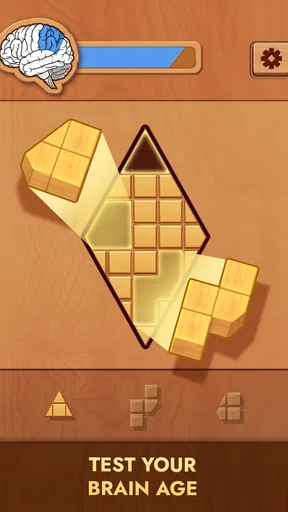
From the moment you launch the app, the simple and elegant design draws you in. The wooden theme, complete with earthy tones and smooth animations, gives off a calming vibe. It’s one of those games where you can completely lose track of time as your mind gets absorbed in finding the perfect fit for each block.
Worth Reading Before You Choose

Baby Panda World Brings Quick Play to Modern Phones, but Its Game Library Feels Busy

ESPN’s Live Game View Makes Following Close Games Easier

QuizzLand Review: A Good Fit for Short Trivia Breaks, Not Every Player

Basketball Stars: Multiplayer Is Fast, but Can It Recover When Matches Go Wrong?

WEBTOON Turns Phone Updates Into a Better Reading Routine

Link to Windows Runs on Shared Habits, Not Social Feeds
There’s no rush here, which is something I personally love. You can take as long as you need to plan your moves. This makes it ideal for those moments when you just want to unwind without the pressure of a ticking clock. It’s like a digital form of meditation with a sprinkle of strategy!
A realistic use for me is a short wait between errands: I can open a round, inspect the board, and make a few careful placements without needing sound, a long explanation, or a fixed block of free time. The same quality works during a quiet break at home. I would not choose it while walking through a busy station or doing anything that needs my full attention, since a chain of careless moves can leave the grid cramped before I notice.
Daily variety, with a familiar core
As you continue to play, Woodoku keeps things interesting with daily challenges and special puzzles. These are a great way to test your skills and keep the game fresh. Completing these challenges rewards you with points that contribute to your overall ranking. It’s a neat little incentive to keep coming back.
That variety gives regular players a reason to return, but the main pleasure remains the same: reading a board and deciding how to use the pieces in front of you. If I want a change of pace, a daily puzzle is a better choice than simply trying to beat a personal score again. If I want a more open-ended session, the standard grid is easier to approach without making a particular challenge the goal.
What’s more, the game tracks your progress, so you can always aim to beat your previous scores. It’s satisfying to see your improvement over time, and there’s a genuine sense of accomplishment when you manage to clear multiple rows or squares in one go. I find personal bests more useful as a prompt to refine my decisions than as proof that every session should be longer than the last.
How it compares with other puzzle choices
Compared with a traditional Sudoku app, Woodoku asks for spatial planning with shapes rather than number candidates and deduction. Someone who enjoys scanning a Sudoku grid for a logical next number may prefer that more methodical style; someone who likes manipulating pieces and managing open space is more likely to click with this board. It also differs from falling-block games: there is no need to react to pieces dropping under a timer, so I can take a moment to assess the grid.
That slower pace makes it a comfortable alternative when I want a small mental challenge without a countdown. The trade-off is that the core board can feel repetitive once the placement-and-clear rhythm is familiar. Daily challenges help vary the routine, but they do not turn the game into a broad collection of unrelated puzzle types. I would choose a varied puzzle collection if novelty is my main priority, and Woodoku if I want one clear, repeatable rule set.
Changes, continuity, and what to keep in mind
The game was released on March 25, 2020, and its current version is 4.13.00. Those details show that this is an established title with a current version beyond its original release, but they do not, on their own, tell me which mechanics or interface elements have changed over time. For someone already playing, the practical point is that the core grid puzzle remains easy to understand: there is no need to relearn a complicated ruleset just to return for a quick session.
For a new player, I would start by paying attention to board space rather than chasing a high score immediately. Leave room for awkward shapes, look for moves that can clear more than one line or square, and resist filling a useful open area just because a piece fits there. These habits make the game more satisfying without turning a casual puzzle into homework.
Woodoku is free to download, with optional in-app purchases priced from $0.99 to $99.99 per item. I would begin without buying anything: the central appeal is placing shapes and clearing the board, not collecting extras. Since purchases are optional, the game can be tried as a straightforward puzzle first; anyone who prefers to avoid spending should still pay attention to purchase prompts and device settings, especially if a child is playing.
The audience size and Everyone rating make it easy to recommend as an accessible starting point for casual block puzzles, though that does not mean it will suit every player. It is a good fit for people who like calm, self-paced spatial reasoning and a score they can try to improve. It is less compelling for players seeking a campaign, multiplayer competition, demanding Sudoku logic, or a steady stream of completely different mechanics.
What I would watch as a player
For someone deciding whether to keep it installed, I would watch how the recurring challenges and score tracking affect their own routine. If those give you a reason to return without making every spare moment feel like a streak to maintain, they add useful structure. If you find yourself repeating rounds only to chase a number, it may be better to take a break or switch to a puzzle with a clear endpoint.
I would also judge the experience by whether the board stays calming after several rounds. The same focused loop that makes a short session satisfying can become monotonous if you expect constant surprises. In my view, Woodoku works best as one small option in a mix of downtime activities: accessible when I want to think spatially, easy to put aside when I want a different kind of challenge.
What Makes Woodoku Tick?
Woodoku combines the classic elements of wood block games and Sudoku into one seamless experience. The main idea is to fit blocks into a 9x9 grid, aiming to clear rows, columns, or 3x3 squares. Sounds easy, right? But as you progress, it becomes a strategic dance of placing pieces in just the right spot to maximize your score.
The Gameplay Experience
From the moment you launch the app, the simple and elegant design draws you in. The wooden theme, complete with earthy tones and smooth animations, gives off a calming vibe. It’s one of those games where you can completely lose track of time as your mind gets absorbed in finding the perfect fit for each block.
There’s no rush here, which is something I personally love. You can take as long as you need to plan your moves. This makes it ideal for those moments when you just want to unwind without the pressure of a ticking clock. It’s like a digital form of meditation with a sprinkle of strategy!
Challenges and Rewards
As you continue to play, Woodoku keeps things interesting with daily challenges and special puzzles. These are a great way to test your skills and keep the game fresh. Completing these challenges rewards you with points that contribute to your overall ranking. It’s a neat little incentive to keep coming back.
What’s more, the game tracks your progress, so you can always aim to beat your previous scores. It’s satisfying to see your improvement over time, and there’s a genuine sense of accomplishment when you manage to clear multiple rows or squares in one go.
Perfect for All Occasions
Whether you’re waiting for your coffee to brew or just need a break from a hectic day, Woodoku - Wood Block Puzzle fits seamlessly into your life. It doesn’t demand too much attention but offers just enough challenge to keep your brain active.
Another thing I appreciate is how the game is free from intrusive ads. You can play uninterrupted for as long as you like, which is a rare feature in mobile games these days. Of course, there are in-app purchases available if you want to enhance your experience, but they’re by no means necessary to enjoy the game.
Final Thoughts
In a sea of fast-paced, high-stakes games, Woodoku stands out as a calming yet stimulating experience. It’s perfect for anyone who loves puzzles and appreciates a game that respects your time and attention. So, if you’re looking for a game that’s both relaxing and mentally engaging, give Woodoku a try. You might just find yourself hooked on fitting those wooden blocks into place!
Ready to test your puzzle-solving skills? You can download Woodoku - Wood Block Puzzle from the App Store or Google Play and start your journey today!
Pros
- Engaging and relaxing gameplay.
- Simple and intuitive interface.
- Offline play available.
- No time limits
- play at your pace.
- Visually appealing wood theme.
Cons
- Ads can be intrusive.
- Limited game modes.
- Occasional performance lags.
- No multiplayer option.
- In-app purchases can be pricey.
FAQs for Woodoku - Wood Block Puzzle
What is Woodoku, and how do you play it?
Woodoku is a calming and addictive puzzle game that combines elements of Sudoku and block puzzles. Players must strategically place wooden blocks on a 9x9 grid. The goal is to clear lines and 3x3 squares by completely filling them with blocks. There are no time limits, making it a perfect game for relaxation and mental exercise.
Is Woodoku free to download and play?
Yes, Woodoku is free to download and play on both Android and iOS devices. While the game is free, it does include in-app advertisements and offers optional in-app purchases to enhance gameplay, such as removing ads or acquiring hints. These purchases are entirely optional, and the game can be enjoyed without them.
Does Woodoku require an internet connection to play?
No, Woodoku does not require an internet connection for basic gameplay. You can enjoy playing the game offline. However, an internet connection may be necessary for certain features, such as accessing additional content, updates, or in-app purchases. This makes it a great game for on-the-go entertainment without data usage.
What are the benefits of playing Woodoku?
Playing Woodoku offers several cognitive benefits, including improved problem-solving skills, enhanced concentration, and stress relief. The game’s calming design and lack of time pressure allow players to relax while engaging their minds. It’s suitable for all ages, making it a great tool for mental exercise and relaxation.
Are there any accessibility features in Woodoku?
Woodoku provides a clean and user-friendly interface, making it accessible to a wide range of players. However, at this time, the game does not offer specific accessibility features for players with visual or motor impairments. Developers frequently update the app, so it’s worth checking for any new accessibility enhancements.


